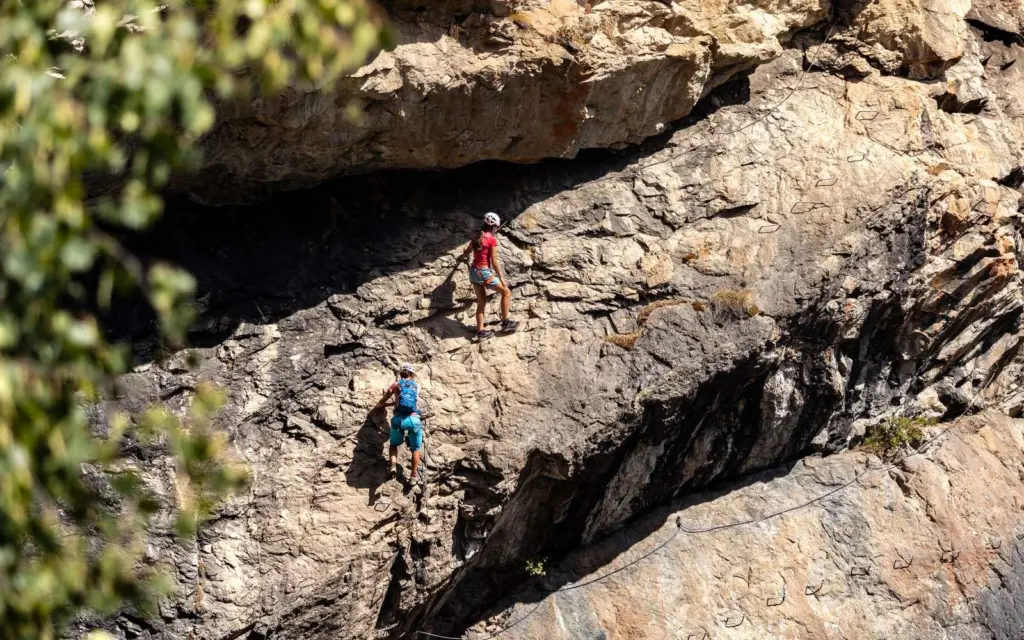
Looking for your first via ferrata Carinthia route? Start with a short grade B climb, clip in with a proper set and helmet, and build up gradually.
For the wider picture, read about outdoor activities in carinthia across the region.
| Route | Key fact |
|---|---|
| Murmelsteig, Falkert | Grade B-C, about 400 m of climbing, around 2 hours from Falkertsee |
| Falkensteig, Falkert | Grade C-D, about 300 m of climbing |
| Falkertsee starting point | 1875 m altitude |
| Weg der Oberkärntner Jäger | Grade B, 230 m of cable, about 1 hour in total |
These figures come from the Heidi Alm Falkert page and a climbing database listing. Routes, conditions and details can change, so check the sources before you rely on them.
What a via ferrata actually is
A via ferrata is Italian for “iron path”: a protected climbing route where steel cables, rungs or ladders are fixed to the rock. You clip a harness-and-lanyard set onto the metal, which limits the effect of a fall, as Wikipedia’s via ferrata entry explains.
Wikipedia says a great many via ferratas exist in the European Alps, with the majority found in Italy and Austria. Carinthia has its share, for example in the Nock Mountains and the Karawanks, as the route database for the Kanzianiberg shows.
Routes fall into two broad types, according to an Austrian Alpine Club tutorial:
- Alpine routes usually end on a summit and bring thunderstorms, sudden weather changes and long descents into play.
- Sport routes sit close to the valley, with short and largely safe approach and descent routes.
How do the difficulty grades work?
The scale most used in the Eastern Alps is the Schall scale. It has five levels, from A (easy) to E (extremely difficult), according to the Austrian Alpine Club tutorial.
Treat grades as a guide only. A Schladming-Dachstein safety page notes that ratings are subjective and that there is no uniform international or European rating scale for via ferratas.
In practice, the grades mean roughly this:
- A: ideal for beginners and children, with large natural footholds or iron pitons and ladders.
- B: the most common grade, with steeper rock, more exposure and smaller footholds.
- C: steep to very steep, with climbing on the rock face and physically demanding passages.
- D: vertical or overhanging terrain that is not suitable for beginners, according to a Styrian hotel’s safety page.
The overall difficulty depends on the distance and frequency of the hard sections, so a long B route can tire you more than a short C route. Build up from A to B, then C, and only then think about D.
Via ferrata routes in Carinthia to know
Falkert in the Nock Mountains
The Falkert has two routes that start from the Falkertsee at 1875 m, above the valley location of Patergassen at 1015 m. According to the Heidi Alm page, the approach is a 30-minute walk toward the Sonntagstal.
The Murmelsteig is rated B-C, covers about 400 m of climbing and takes around 2 hours from Falkertsee. Its highlight is a 20-metre rope bridge. The Falkensteig is rated C-D with about 300 m of climbing, so it is a step up.
The same page states that climbing experience is necessary and that use is at your own risk. It does not recommend the Murmelsteig for children before the age of 10, and the Falkensteig only from the age of 14 with plenty of experience, stamina and strength.
Weg der Oberkärntner Jäger
This grade B route in the Nock Mountains is short: the climbing.place listing gives 230 m of cable and about 1 hour in total. The climb itself is given as 20 minutes, with a 20-minute approach and a 20-minute exit.
The listing has no logs or topo yet, so treat it as a starting point. Ask locally about current conditions before you go.
Kanzianiberg, variant E
In the Karawanks, Kanzianiberg variant E is graded B/C with 400 m of cable. The listing gives about 2 hrs in total, which makes it a longer outing than the grade B route above.
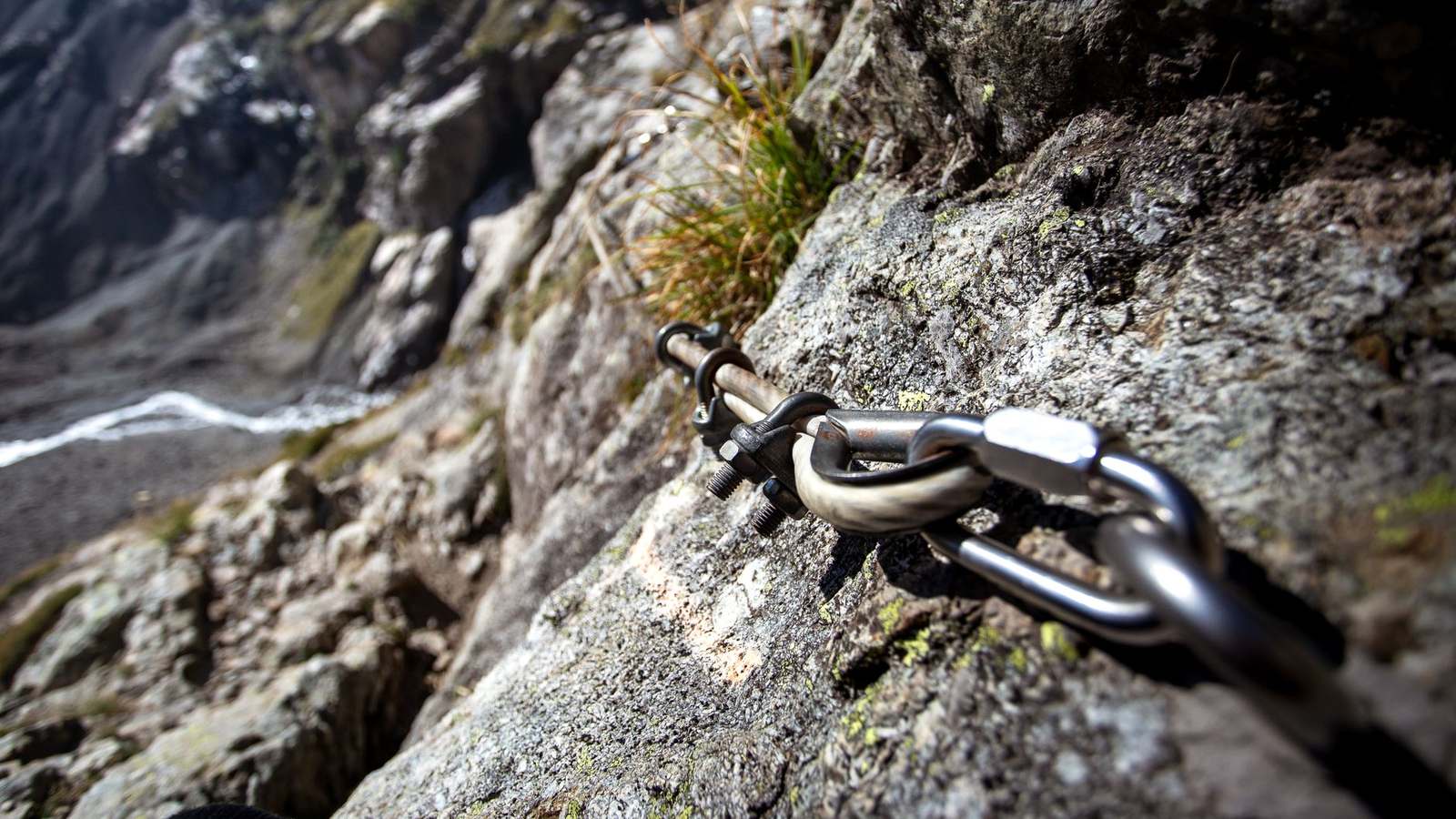
Gear you need before you clip in
The Falkert page lists the basic kit for its routes, and the same list applies to most via ferratas:
- A correctly fitted sit or combination climbing harness.
- A via ferrata set with two carabiners and a shock absorber, built to the current standard.
- A climbing helmet, which protects against falling rocks and falls.
- Sturdy gloves to protect your hands on the steel cable.
- Sturdy mountaineering or approach shoes with grippy soles.
- Weather-appropriate clothing.
If you do not own the kit, renting is the usual route for a first try. The Heidi Alm page names the Nocksport Huber hire centre on the Falkert as one place that lends a set and a helmet.
Whatever you buy or borrow, check that the harness fits snugly and that the set meets the current standard. Ask the hire staff to explain how the shock absorber works before you leave the valley, and look for any route-specific advice on gloves and footwear.
Safety rules that matter most
The Schladming-Dachstein safety page says many mountain rescue missions are due to carelessness and bad weather. Its rules boil down to this:
- Be honest about your stamina, head for heights and surefootedness.
- Always wear a set and helmet, and attach yourself to the safety cable.
- Plan for weather changes, because many tours take all day.
- Respect other climbers and warn them of dangers.
- Treat nature with care and take your rubbish home.
In an emergency, the same page gives 140 for mountain rescue and 112 as the European emergency number. Save both in your phone before you start.
Planning your day around the mountain
Check the forecast, pick a route that matches your grade, and add the approach time to the climb. The Falkert page, for example, suggests a guided option: a mountain guide leads a Murmelsteig tour from 9am every Wednesday in July and August.
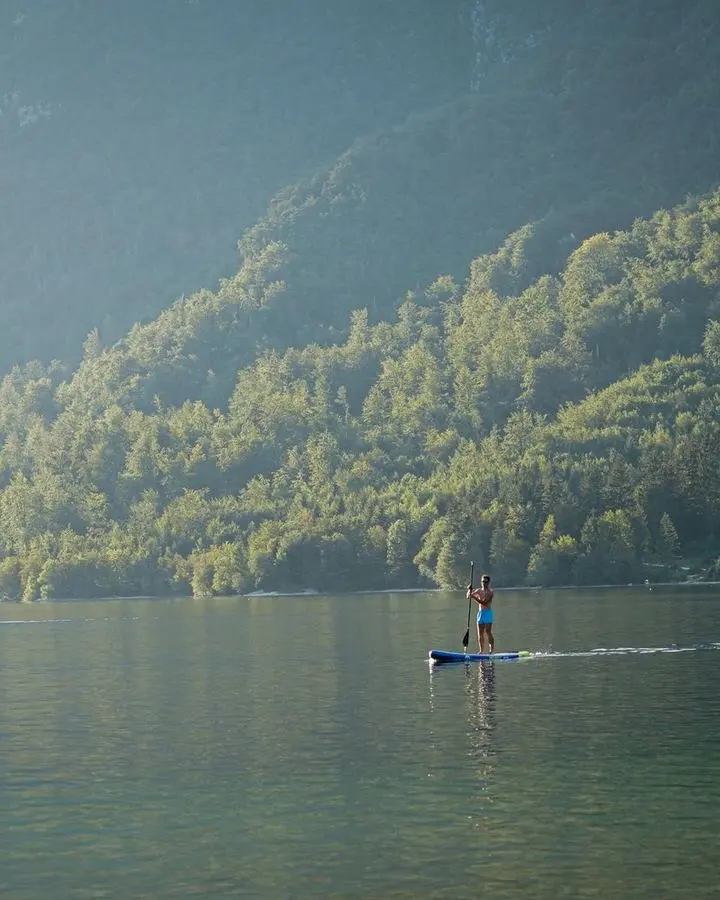
Because most routes begin with a walk, the basics of hiking in carinthia help with the approach. For an easier day between climbs, consider stand up paddling wörthersee on the lake.
Frequently asked questions
Do I need experience for a via ferrata in Carinthia?
Show answer
For the Falkert routes, the Heidi Alm page says climbing experience is necessary. A short grade B route is a gentler start, and a guided tour is another option.
Can children try a via ferrata?
Show answer
Grade A routes are ideal for beginners and children, according to the Austrian Alpine Club tutorial. On the Falkert, the mountain guide does not recommend the Murmelsteig before the age of 10, or the Falkensteig before 14.
Can I hire a via ferrata set?
Show answer
The Heidi Alm page says a set and helmet can be hired at the Nocksport Huber hire centre on the Falkert. Other areas vary, so check locally.
Which emergency number should I call?
Show answer
The Schladming-Dachstein safety page lists 140 for mountain rescue and 112 for the European emergency call. Either can be dialled from your mobile phone.