If you want to know what real kärntner kasnudeln are, here is the short answer: hand-crimped dough pockets filled with dry curd and potato, flavoured with mint or chervil. This guide shows you how they are made and served.
Kasnudeln are one dish among many in carinthian cuisine, so this page stays with the dumpling itself.
| Item | Value |
|---|---|
| Earliest written report | Around 1485 |
| Archive document naming the dish | 1753 |
| Dough resting time | 30–45 minutes |
| Boiling time | 10–12 minutes |
| Dough circle size | About 10 cm across |
| Dry curd in a recipe for four | 300 g |
These figures come from the Austrian agriculture ministry’s traditional foods entry and a recipe on austria.info. They can change, so check the sources before you rely on them.
What exactly are Kärntner Kasnudeln?
The Kasnudel is probably Carinthia’s best-known dish, yet it is not a noodle at all. According to the Austria-Forum Heimatlexikon, it is a dough pocket filled with curd and ingredients that vary by region.
The ministry’s description is more specific. The pockets are traditionally made by hand and filled with a (crumbly) curd and potato mixture, seasoned with mint and/or chervil.
The name works as a family label. Other Carinthian pockets follow the same method but change the filling, such as Specknudeln, Heidennudeln or Kletzennudeln, the last one filled with dried pears.
Where do Kasnudeln come from?
The dish is old. The ministry entry points to the traveller Paolo Santonino, secretary to the Patriarch of Aquileia, who reported around 1485 on dough creations made by industrious women during his journeys through the Drau valley.
The same entry links the dish to dairy farming. Unfree farmers who cleared land for their alpine dairy farms owed their landlord up to 300 wheels of cheese a year, and medieval deeds already mention cheese krapfen served with cabbage and clarified butter as a festive meal.
The Spittal document and a different view
A 1753 document from the Porcia estate in Spittal, held in the Klagenfurt provincial archive, mentions the Carinthian noodle. The ministry therefore suggests that Spittal, and Upper Carinthia, may have been the original home.
The Austria-Forum entry disagrees. It argues that small dairy farms shaped cooking in almost every Carinthian valley, so the dish was probably widespread by the eighteenth century.
Out of fashion and back again
Toward the end of the 1960s, the Carinthian noodle was seen as a leftover of a farming culture that tastes had turned away from. The revival of Austrian regional cooking in the later decades of the twentieth century brought it back to the table.
How the crimped edge is made
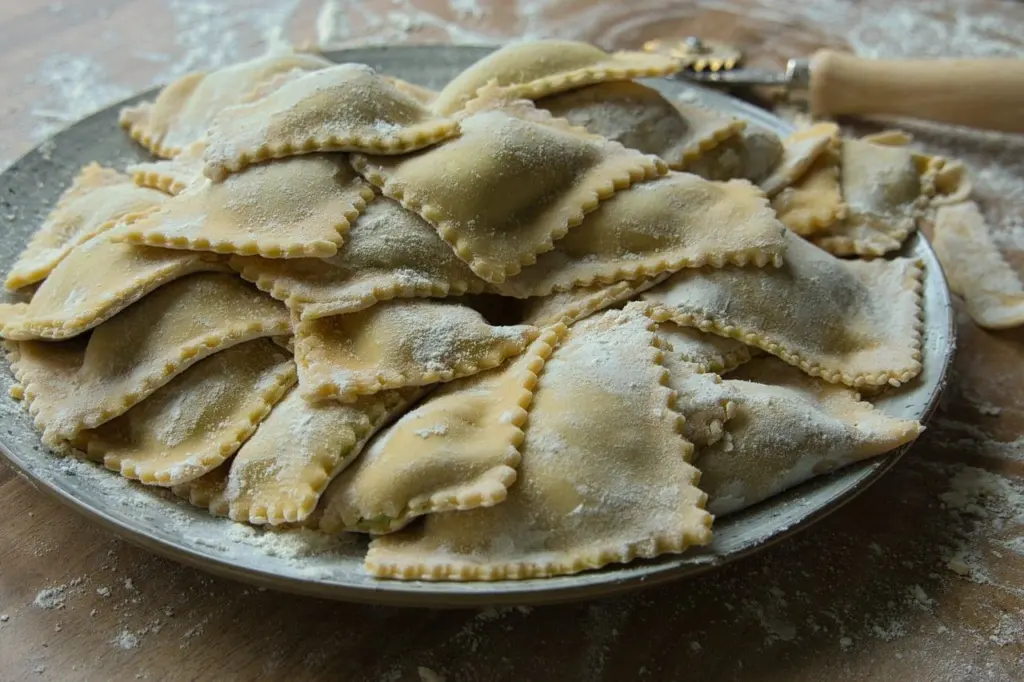
The ridged rim is the visible signature of the Carinthian version. The ministry calls this artfully crimped or wheel-cut edge the characteristic feature of the Carinthian noodle, and the verb for making it is krendeln.
In Upper Carinthia the opposite dough edges are pressed together in an offset pattern, so a ridge forms. In Lower Carinthia that method is not common, and the pockets are made like ravioli by laying one sheet of dough over another.
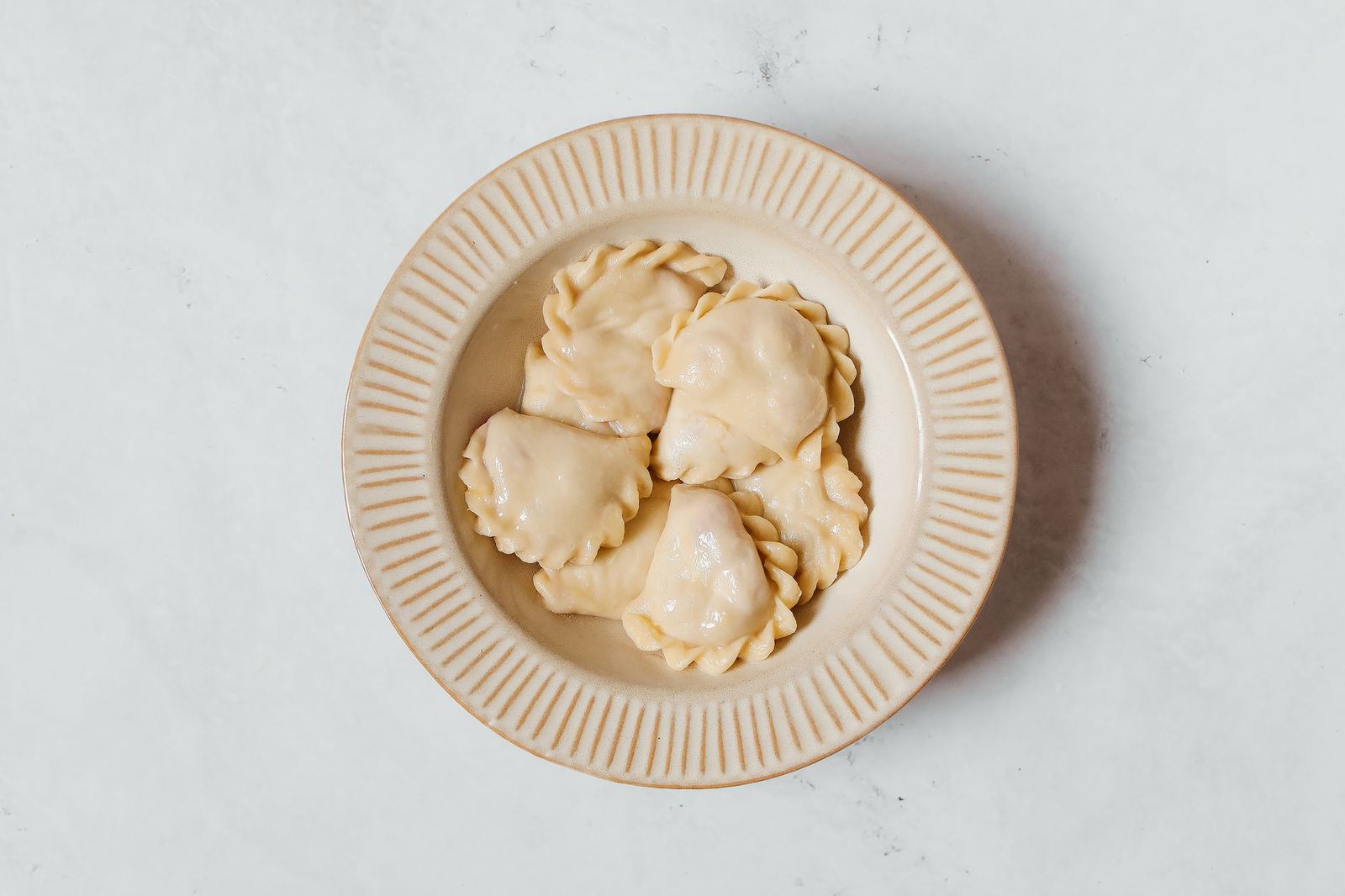
Skill with the crimp even entered local lore. ADAC Maps notes that Carinthian girls were said to be ready for marriage only once they had mastered it properly.
A Kasnudel recipe for four
This version follows the austria.info recipe by Renate Wagner. It serves four and takes about 80 minutes. Its author says the secret is the filling, with the mild Carinthian noodle mint.
Ingredients
- Dough: 300 g plain flour of the “griffig” type, one egg, a pinch of salt, a splash of oil and water as needed, plus one egg white for brushing.
- Filling: 150 g peeled potatoes, 300 g dry, low-fat curd (Bröseltopfen), a little diced onion, finely chopped mixed herbs (noodle mint, chervil, parsley), sour cream, salt and butter for sweating the onion. A second egg is optional.
- To serve: 100 g browned butter, and a green salad on the side.
Steps
- Heap the flour on the work surface, press a well into it and crack in the egg. Add a little salt, a little oil and enough water to make a smooth dough, then rest it under foil for 30 to 45 minutes.
- Boil the potatoes until soft, cool them briefly and press them through a ricer. Sweat the onion in butter, add the herbs and salt, then mix everything with the curd. Loosen the filling with sour cream if needed.
- Roll the dough out to the thickness of a knife back and cut circles about 10 cm across. Put a little filling on each, brush the edges with beaten egg white, fold over and press firmly, then crimp the edge between your fingers.
- Simmer the pockets gently in plenty of salted water for 10 to 12 minutes, depending on size. Lift them out carefully onto warmed plates and pour over foaming browned butter.
Fillings, toppings and valley differences
The Austria-Forum entry states that there is no original recipe. The filling changes from valley to valley, sometimes from village to village.
What stays constant is a curd base. It is mixed with potatoes, breadcrumbs or, rarely, millet, plus fresh herbs, and the herb choice varies so much that the entry speaks of different Kasnudel schools. Mint, parsley and chervil appear most often.
The finishing fat varies as well. Cooked pockets may be poured over with cracklings lard, melted butter, glassy-fried bacon cubes or breadcrumbs toasted in butter.
In southern Carinthia, austria.info notes, cooks often use melted Sasaka instead of melted butter. The word comes from Slovenian and simply means finely chopped bacon.
Not to be confused with Schlutzkrapfen
The ministry separates Kasnudeln from Schlutzkrapfen. These are nut-sized pockets, often made with a mix of rye and wheat flour and filled with sauerkraut, potato or spinach.
In Carinthia they are also called Schlickkrapfen and are usually served in soup, for example with a meat filling. In some Upper Carinthian areas, including the Gailtal, certain noodles are also called “Krapfen”, though they have nothing in common with the fried pastry of that name.
Eating Kasnudeln the Carinthian way
Traditionally the pockets came to the table in a carved wooden bowl, turned from a single piece of wood. A hollow in the middle held hot lard for dipping, and everyone ate straight from the bowl placed in the centre of the table.
The meatless version was eaten mostly on Friday, the meat-free day in Catholic tradition. ADAC Maps calls the Kasnudel the national dish of Carinthia and says it returned to restaurant menus once regional specialities became fashionable again.
You can also meet the dish at a festival. According to the Austria-Forum entry, which was last edited in December 2022, a festival dedicated to the Carinthian noodle has been held in Oberdrauburg since 2002, on the first weekend in August. Check the festival’s own announcements before you plan a trip around it.
If you want to go beyond the dumpling, the page on traditional carinthian food covers the wider table. For something sweet, the reindling recipe covers the yeast cake with raisins, nuts and cinnamon that ADAC Maps lists among Carinthian sweets.
Frequently asked questions
Are Kärntner Kasnudeln vegetarian?
Show answer
The classic filling of curd and potato has no meat, and the ministry notes a meatless version was eaten on Fridays. The topping matters, though: lard with cracklings or bacon cubes are common finishes, while melted or browned butter keeps the dish vegetarian.
What does krendeln mean?
Show answer
It is the Carinthian word for closing the dough pocket by pressing the edges together in a zigzag pattern. The result is a ridged rim, which the ministry describes as the characteristic feature of the Carinthian noodle.
Is there one original Kasnudel recipe?
Show answer
No. The Austria-Forum entry says there is no original recipe and that the filling differs from valley to valley.
How are Kasnudeln different from Schlutzkrapfen?
Show answer
Size and role set them apart. Kasnudeln are a main course with a curd and potato filling, while Schlutzkrapfen are small, nut-sized pockets, and the Carinthian Schlickkrapfen usually ends up in soup.