You want to taste real alpine cheese in Carinthia, but the labels confuse you. Austrian mountain cheese is usually a hard, raw-milk wheel, and in Carinthia the name to know is Gailtaler Almkäse g.U.
This guide sits within the wider story of carinthian cuisine, where cheese from the high pastures is a recurring thread.
| Item | Value |
|---|---|
| Gailtaler Almkäse production season | Around 90 to 100 days in summer |
| Milk heated in the copper kettle to | About 32°C |
| Salt bath for the wheels | Two to three days |
| Ready as a young, mild cheese | After two months |
| Earliest written mention | 1375 to 1381 |
| Pastures in today’s producers’ association | Twelve |
The figures come from the Gailtaler Almkäse g.U. specification and a MeinBezirk report. They can change, so check the source before you rely on them.
What counts as Austrian mountain cheese?
Austrian mountain cheese is less a single product than a family of regional cheeses. The agriculture ministry’s traditional foods page for cheese lists many of them across several provinces.
Among the entries you will meet:
- Hard raw-milk cheeses such as Tiroler Almkäse / Tiroler Alpkäse g.U., described as a hard cheese from raw cow’s milk, and Tiroler Bergkäse g.U., made from natural raw milk from the Tyrolean Alps.
- Vorarlberger Bergkäse g.U., also listed as a hard cheese from natural raw milk.
- Sour-milk cheeses, including Tiroler Graukäse g.U. from low-fat cow’s milk and Ennstaler Steirerkas g.U., made on alpine pastures, farms and in a dairy in the Styrian Ennstal.
- Regional specialities such as Mostviertler Schofkas, a sheep cheese in roll form, and Pinzgauer Bierkäse, a lean cheese.
- Glundner Käse, the Carinthian entry on the list.
The label g.U. stands for geschützte Ursprungsbezeichnung, the protected designation of origin. The Gailtal producers’ English text calls it PDO, as the ministry’s Gailtaler Almkäse entry shows for the Carinthian cheese.
Gailtaler Almkäse g.U.: Carinthia’s protected pasture cheese
The ministry describes Gailtaler Almkäse as a traditionally produced hard cheese made from pure alpine raw milk from Gail Valley pastures, whose vegetation is rich in herbs and legumes, according to its entry for the cheese. The producers call it one of Austria’s oldest alpine cheeses.
Protection came in stages. The Gailtaler Almprotokoll of 1994 set the first binding quality standards for production, animal husbandry and marketing. The producers’ association was formed in April 1996, and a year later the cheese received its g.U. status, as a MeinBezirk report of July 2026 recounts.
The Austrian Patent Office page, which carries a 2026 copyright notice, says the cheese is listed in the EU register. It adds that the documents are available in German only.
How the cheese is made on the pasture
The cheese is made only in the alpine season, which lasts around 90 to 100 days in summer, directly on the mountain pastures. The cows belong to small valley farms and are milked twice a day, as the producers’ specification explains.
The steps run like this:
- In the evening, the fresh raw milk is stored in vats at room temperature so the natural bacterial flora can develop.
- The next morning, the risen cream is skimmed and made into alpine butter.
- The remaining milk is combined with the fresh morning milk in a copper kettle and heated over a fire to about 32°C. Lactic acid bacteria and natural rennet are added.
- After coagulation, the curd is cut with a cheese harp into wheat grain-sized pieces, stirred and heated until firm.
- The curd is lifted out with a cheesecloth and placed into molds.
- After pressing, the wheels spend two to three days in a salt bath, which helps form the natural rind.
Cows from different farmers come together in one herd and must quickly form a harmonious community. The cheesemakers say that handling milk and animals calls for the same delicate touch.
Rind, ageing and flavour
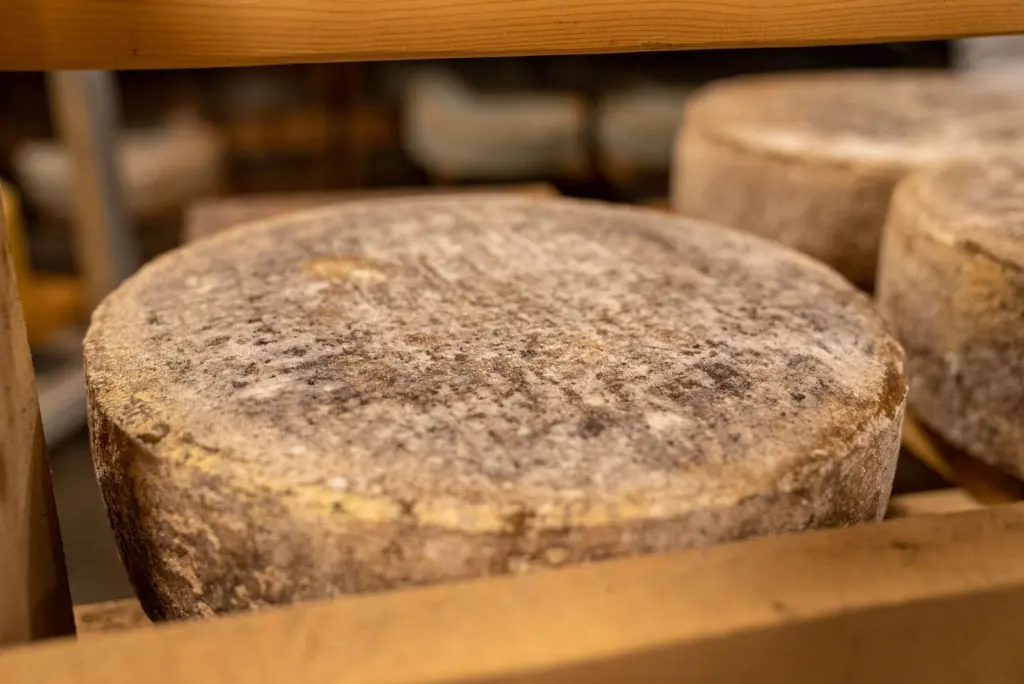
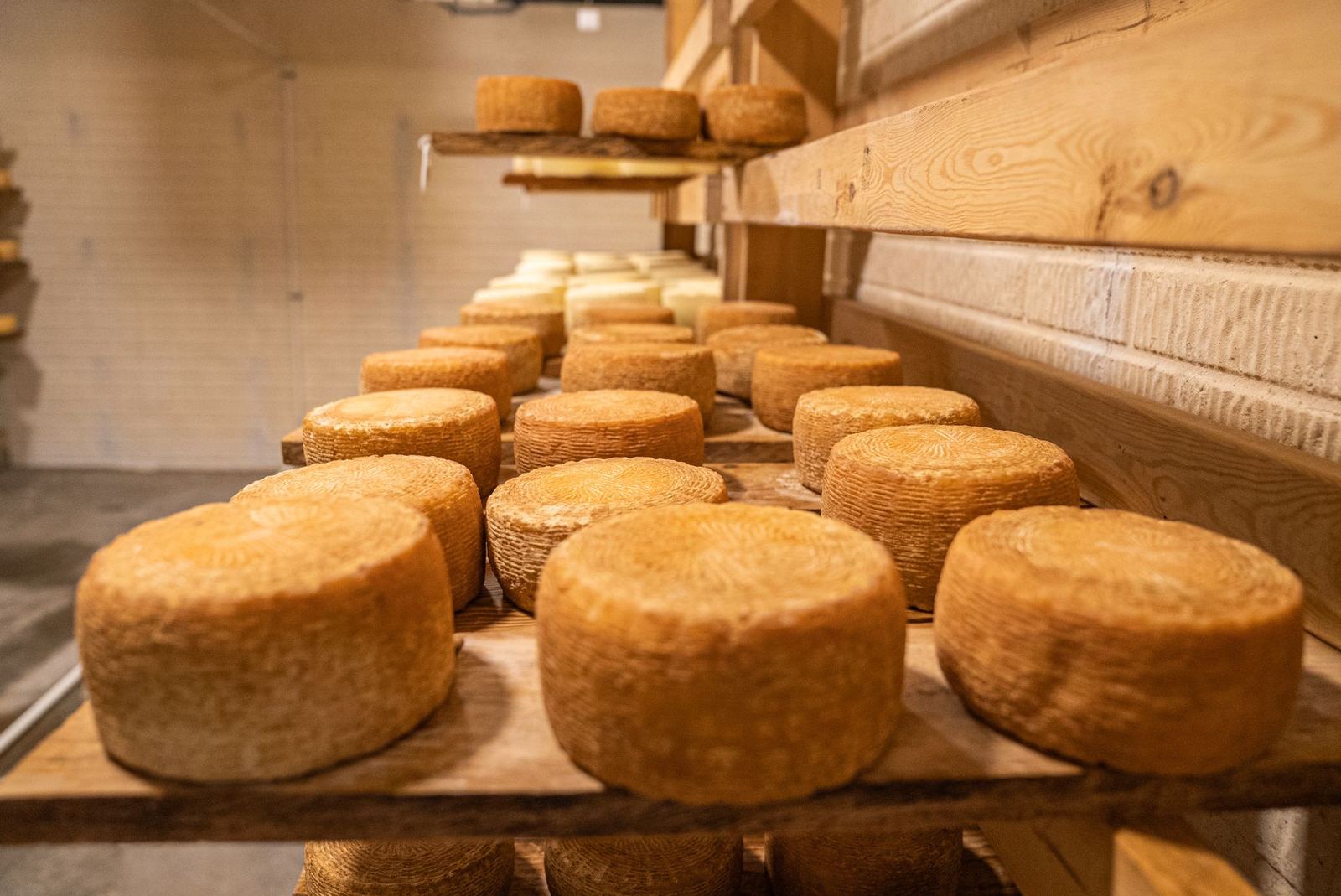
The wheels are recognisable by a dry, smooth, golden-yellow natural rind and the absence of surface ripening. In the cheese cellar they keep maturing under daily care and observation.
After just two months the cheese is ready to eat, young and mild. With longer ageing it develops spiciness and complexity.
The producers say the taste varies from pasture to pasture. Four things shape the aroma:
- the altitude of the pasture
- the herb composition of the meadows
- the weather conditions
- the cheesemaker’s skill
The season also decides what you find. At the end of the alpine summer only young cheese is available, while in winter and spring mainly matured wheels are offered.
A short history of alpine dairying in the Gail Valley
The ministry’s entry dates the earliest production to the register of the Count of Görz, from 1375 to 1381. From there, the story runs through some hard chapters:
- Until the middle of the 19th century, much Gailtal cheese was still made half-fat and unpressed and sold fresh. Fat cheese then won out thanks to better keeping, easier transport and a fuller taste.
- In the First World War, the dairies were badly damaged by fighting around the Plöckenpass, and some had to be rebuilt completely.
- In 1949, 39 alpine dairies were still active in the valley. From the 1960s the trade lost importance, the number fell to around twenty, and in the 1970s it dropped to seven.
- A turn toward extensive, quality-minded farming brought a revival, and the association now unites twelve pastures.
The area of origin takes in all pastures on the north- and south-facing flanks of the Gail Valley. The Lesach Valley pastures are left out for historical reasons, according to the ministry entry.
Meeting the cheese in its valley
Each summer the association marks the season with an official cheese cut, the Almkäseanschnitt. A MeinBezirk report dated 12 July 2026 announced the association’s 30th-anniversary celebration for 18 July at the Reisacher Jochalm, held together with the 88th Carinthian Landesalmwandertag. The same report puts the walk from the Reißkofelbad up to the Jochalm at around one and a half hours.
Cheese is only part of the menu. The guide to alpine hut food austria shows what else the mountain kitchens serve.
For a very different taste of the region, read about carinthian lake fish dishes.
Frequently asked questions
What is Gailtaler Almkäse?
Show answer
It is a traditionally produced hard cheese from pure alpine raw milk from Gail Valley pastures. The ministry’s entry describes those pastures as rich in herbs and legumes.
When is it made?
Show answer
Only during the alpine season of around 90 to 100 days in summer, directly on the pastures. Young cheese is available at the end of summer, and matured wheels are offered mainly in winter and spring.
How long does it take to ripen?
Show answer
After two months it is ready to enjoy as a young, mild cheese. Longer ageing brings spiciness and complexity.
What does g.U. mean?
Show answer
It is short for geschützte Ursprungsbezeichnung, the protected designation of origin, called PDO in the producers’ English text. The Austrian Patent Office page, with its 2026 copyright notice, lists the cheese in the EU register.
Which pastures are included?
Show answer
All pastures on the north- and south-facing flanks of the Gail Valley. The Lesach Valley pastures are excluded for historical reasons.